Sunday, 17 January 2016

Assignment

Assignment
'2 minutes'

Land Art


Land art is art that is made directly in the landscape, sculpting the land itself into earthworks or making structures in the landscape using natural materials such as rocks or twigs. 

Land art was part of the wider conceptual art movement in the 1960s and 1970s. The most famous land art work is Robert Smithson’s Spiral Jetty of 1970, an earthwork built out into the Great Salt Lake in the USA. Though some artists such as Smithson used mechanical earth-moving equipment to make their artworks, other artists made minimal and temporary interventions in the landscape such as Richard Long who simply walked up and down until he had made a mark in the earth.
Land art, which is also known as earth art, was usually documented in artworks using photographs and maps which the artist could exhibit in a gallery. Land artists also made land art in the gallery by bringing in material from the landscape and using it to create installations.
As well as Richard Long and Robert Smithson, key land artists include Walter de Maria, Michael Heizer.


Theory of Conceptual Art

Conceptual art is art for which the idea (or concept) behind the artwork, and the way it is made are more important than the finished work itself. The term usually refers to artworks from the mid-1960s to the early 1970s. Because conceptual artists stressed the ideas and methods of production as the value of the work (rather than the finished object), it follows that conceptual art can be – and look like – almost anything. This is because, unlike a painter or sculptor who will think about how best they can express their idea using paint or sculptural materials and techniques, a conceptual artist uses whatever materials and whatever form is most appropriate to putting their idea across – this could be anything from a performance to a written description. Although there is no one style or form used by conceptual artists, from the late 1960s certain trends emerged.
 Conceptual art, sometimes simply called Conceptualism, is art in which the concept(s) or idea(s) involved in the work take precedence over traditional aesthetic and material concerns. Many works of conceptual art, sometimes called installations, may be constructed by anyone simply by following a set of written instructions.
A concept is an idea or thought, so the term conceptual art means literally ‘idea art’ – or art about ideas.

Key Artists

Richard Long

He  is an English sculptor and one of the best known British land artist.
He won the  Turner Prize in 1989 for White Water Line.


Richard Long is most famously known for documenting his journeys from epic solitary walks through photography, maps and text.
Several of his works were based around walks that he has made, and as well as land based natural sculpture, he uses the mediums of photography, text and maps of the landscape he has walked over.
In his work, often cited as a response to the environments he walked in, the landscape would be deliberately changed in some way, as in A Line Made by Walking (1967), and sometimes sculptures were made in the landscape from rocks or similar found materials and then photographed. Other pieces consist of photographs or maps of unaltered landscapes accompanied by texts detailing the location and time of the walk it indicates.

1960
A Line Made by Walking (1967)


1970


1980


1990


2000


Robert Smithson

Robert Smithson was an American artist famous for his use of photography in relation to sculpture and land art.
He used the land itself as his medium and the landscape as his gallery.

Robert Smithson
spiral Jetty April 1970, Great Salt Lake, Utah
He soon came to focus on sculpture; he responded to the Minimalism and Conceptualism of the early 1960s and he started to expand his work out of galleries and into the landscape. In 1970, he produced the Earthwork, or Land art, for which he is best known, Spiral Jetty, a remarkable coil of rock composed in the colored waters of the shore of the Great Salt Lake in Utah. In 1973, he died in an aircraft accident when he was surveying the site for another Earthwork in Texas.


Walter de Maria
He was an American artist, sculptor, illustrator and composer, who lived and worked in New York City. Walter de Maria's artistic practice is connected with Minimal artConceptual art, and Land art of the 1960s.


Michael Heizer 
He is a contemporary artist specializing in large-scale sculptures and earth art (or land art). 
Michael Heizer is known for a body of work that relies on the beauty of his natural materials (rocks, dirt, land itself) and that often verges on near-comical grandiosity with its size and themes. 
Michael Heizer, "Rift 1 (Nine Nevada Depressions)," 1968. 
Michael Heizer. Motorcycle Land Art. 'Circular Planar Displacement Drawing' was made in a dry Nevada lake in 1970 by a man driving a motorcycle in circular.
Michael Heizer, Double Negative(1969)
Andrew Goldsworthy

  He is a British sculptor, photographer and environmentalist producing site-specific sculpture and land art situated in natural and urban settings. Goldsworthy regards his creations as transient or ephemeral. He photographs each piece once right after he makes it. His goals is to understand nature by directly participating in nature as intimately as hecan. He generally works with whatever comes to hand: twigs, leaves, stones, snow and ice , reeds and thorns. 


Music in the 60's
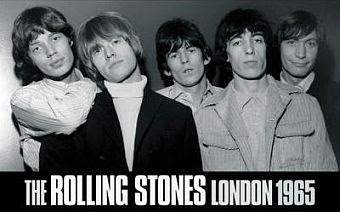
 Music of the United Kingdom developed in the 1960s into one of the leading forms of popular music in the modern world. By the early 1960s the British had developed a viable national music industry and began to produce adapted forms of American music in Beat music and British blues which would be re-exported to America by bands such as The Beatles and Rolling Stones.


https://www.youtube.com/watch?v=_lNP-x94-SE&index=2&list=PLC373F8FF29B7739C


Elvis Presley

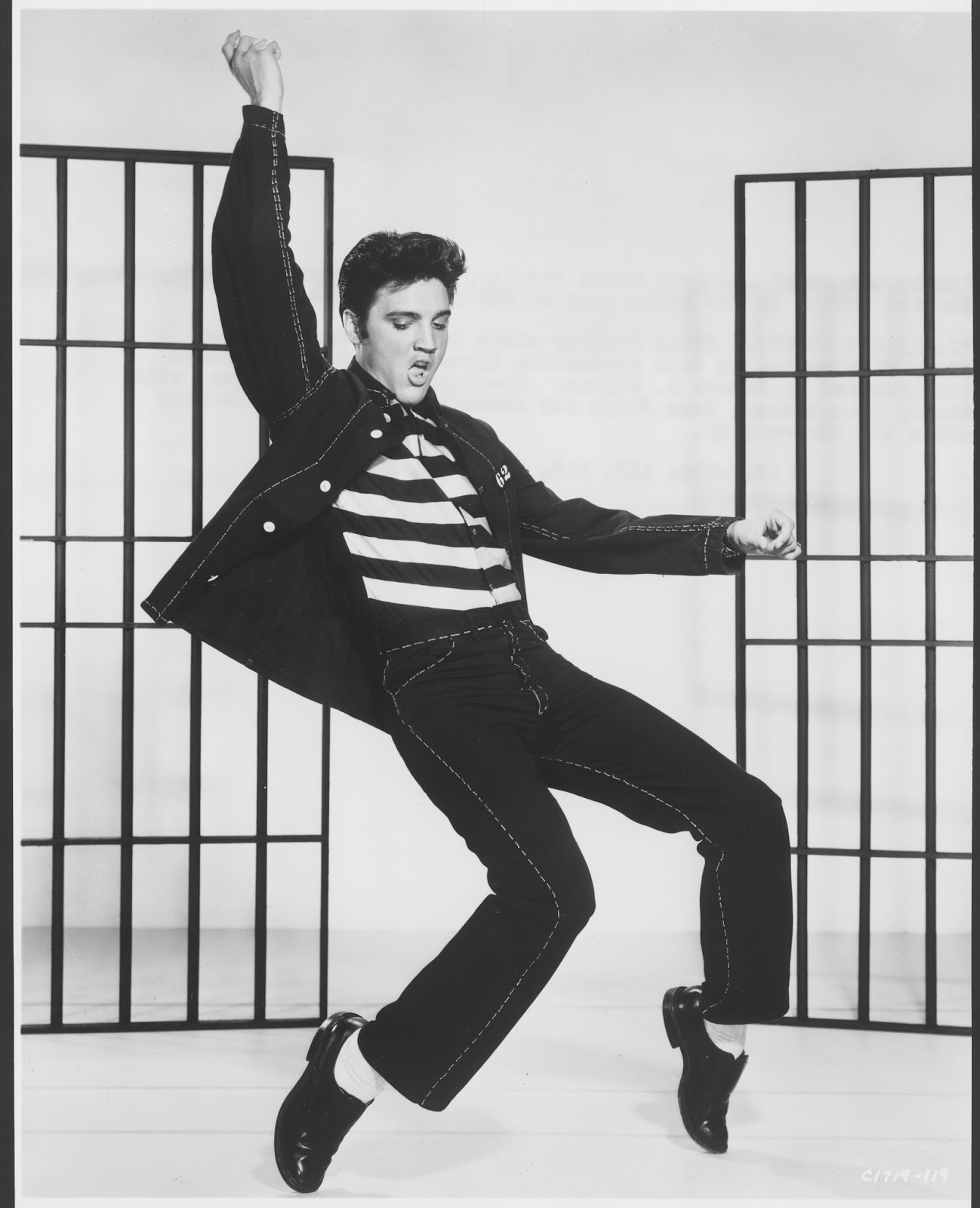
Musician and actor Elvis Presley endured rapid fame in the mid-1950s—on the radio, TV and the silver screen—and continues to be one of the biggest names in rock 'n' roll.  Regarded as one of the most significant cultural icons of the 20th century, he is often referred to as "the King of Rock and Roll", or simply, "the King".


Saturday, 19 December 2015

Digital Art


Digital Art 

In the 1950s, many artists and designers were working with mechanical devices and analogue computers in a way that can be seen as a precursor to the work of the early digital pioneers who followed. One of the earliest electronic works in the V&A's collection is 'Oscillon 40' dating from 1952. The artist, Ben Laposky, used an oscilloscope to manipulate electronic waves that appeared on the small fluorescent screen. An oscilloscope is a device for displaying the wave shape of an electric signal, commonly used for electrical testing purposes. The waves would have been constantly moving and undulating on the display, and there would have been no way of recording these movements on paper at this time. It was only through long exposure photography that the artist was able to record these fleeting moments, allowing us to see them decades later.


Ben
Laposky photographed numerous different combinations of these waves and called his images 'Oscillons'. The earliest photographs were black and white, but in later years the artist used filters in order to produce striking colour images such as 'Oscillon 520'.
1960s.


1960s.
In the early 1960s computers were still in their infancy, and access to them was very limited. Computing technology was heavy and cumbersome, as well as extremely expensive. Only research laboratories, universities and large corporations could afford such equipment. As a result, some of the first people to use computers creatively were computer scientists or mathematicians.

Many of the earliest practitioners programmed the computer themselves. At this time, there was no 'user interface', such as icons or a mouse, and little pre-existing software. By writing their own programs, artists and computer scientists were able to experiment more freely with the creative potential of the computer.


John Lansdown using a Teletype ( an electro-mechanical typewriter)
about 1960-1970


Much of the early work focused on geometric forms and on structure, as opposed to content. This was, in part, due to the restrictive nature of the available output devices, for example, pen plotter drawings tended to be linear, with shading only possible through cross hatching. Some early practitioners deliberately avoided recognisable content in order to concentrate on pure visual form. They considered the computer an autonomous machine that would enable them to carry out visual experiments in an objective manner.

Early output devices were also limited. One of the main sources of output in the 1960s was the plotter, a mechanical device that holds a pen or brush and is linked to a computer that controls its movements. The computer would guide the pen or brush across the drawing surface, or, alternatively, could move the paper underneath the pen, according to instructions given by the computer program.
Another early output device was the impact printer, where ink was applied by force onto the paper, much like a typewriter.


Both plotter drawings and early print-outs were mostly black and white, although some artists, such as computer pioneer Frieder Nake, did produce plotter drawings in colour. Early computer artists experimented with the possibilities of arranging both form and, occasionally, colour in a logical fashion.

'Hommage à Paul Klee 13/9/65 Nr.2', a screenprint of a plotter drawing created by Frieder Nake in 1965, was one of the most complex algorithmic works of its day. An algorithmic work is one that is generated through a set of instructions written by the artist. Nake took his inspiration from an oil- painting by Paul Klee, entitled 'Highroads and Byroads' (1929), now in the collection of the Ludwig Museum, Cologne.

Frieder Nake, 'Hommage à Paul Klee


One of the most famous works to come out of Bell Labs was Leon Harmon and Ken Knowlton's Studies in Perception, 1967, also known as Nude.
Harmon and Knowlton decided to cover the entire wall of a senior colleague's office with a large print, the image of which was made up of small electronic symbols that replaced the grey scale in a scanned photograph. Only by stepping back from the image (which was 12 feet wide), did the symbols merge to form the figure of a reclining nude. Although the image was hastily removed after their colleague returned, and even more hastily dismissed by the institution's PR department, it was leaked into the public realm, first by appearing at a press conference in the loft of Robert Rauschenberg, and later emblazoned across the New York Times. What had started life as a work-place prank became an overnight sensation.


In the early 1970s the Slade School of Art, University of London, established what was later called the 'Experimental and Computing Department'. The Slade was one of the few institutions that attempted to fully integrate the use of computers in art into its teaching curriculum during the 1970s. The department offered unparalleled resources with its in-house computer system.
Paul Brown studied at the Slade from 1977 to 1979. His computer-generated drawings, use individual elements that evolve or propagate in accordance with a set of simple rules. Brown developed a tile-based image generating system. Despite using relatively simple forms, it would have taken a long time to write a program to produce a work such as this.

Paul Brown, 'Untitled Computer Assisted Drawing', 1975.
Manuel Barbadillo, 'Untitled', about 1972.

The 1980s saw digital technologies reach into everyday life, with the widespread adoption of computers for both business and personal use. Computer graphics and special effects began to be used in films such as 'Star Trek II: The Wrath of Khan' and 'Tron', both 1982, as well as in television programmes. Combined with the popularity of video and computer games, computing technology began to be a much more familiar sight at home, as well as at work.
The late 1970s had seen the births of both Apple and Microsoft and the appearance of some of the first personal computers. PCs were now available that were affordable and compact, and ideal for household use. Alongside this, inkjet printers developed to become the cheapest method of printing in colour. The development of off-the-shelf paint software packages meant it was much simpler to create images using the computer. As this new medium entered popular culture, the type of art being produced changed. Much of the new work of this period demonstrated a clear 'computer aesthetic', seemingly more computer-generated in its appearance.

This image by Kenneth Snelson was created using a 3D computer animation program. The image forms the left side of a stereoscopic image. Accompanied by a near identical image placed to its right and viewed simultaneously, the two images would have created the illusion of a 3D environment.
Kenneth Snelson, 'Forest Devils' MoonNight' (detail), 1989

The term 'Computer Art' is used less frequently to describe artists and designers working with the computer today. Many artists who now work with computers incorporate this technology into their practice as just one tool amongst many that they may use interchangeably. This is part of a more general shift towards artists and designers working in an increasingly interdisciplinary manner. Many no longer define themselves as practitioners of a specific media.
James Faure Walker can be described as both a digital artist and a painter. Since the late 1980s Faure Walker has been integrating the computer into his practice as a painter, incorporating computer-generated images into his paintings, as well as painterly devices into his digital prints. He moves between the tools of drawing, painting, photography and computer software, blending and exploiting the different characteristics of each. His work frequently plays on the contrast between physical paint and digital paint, and sometimes it is difficult to differentiate between the two.

Faure Walker aims to complete at least one drawing each day, either in pencil, pen or watercolour. These drawings are always abstract, and have their roots in gestural mark making, rather than being figurative drawings of objects. In the same way, the artist uses software packages such as Illustrator and Photoshop to explore digital motifs, or linear marks and patterns. A motif that has been created digitally might then be projected onto a canvas using a digital projector, where the artist can begin experimenting with the pattern or motif in the physical medium of paint. Faure Walker creates digital photographs of his paintings in progress, so that he can try out changes and additions on the computer before adding them to the canvas. He applies this same method to his production of large digital prints such as 'Dark Filament', incorporating found imagery such as a botanical illustration.

James Faure Walker, 'Dark Filament' (detail), 2007